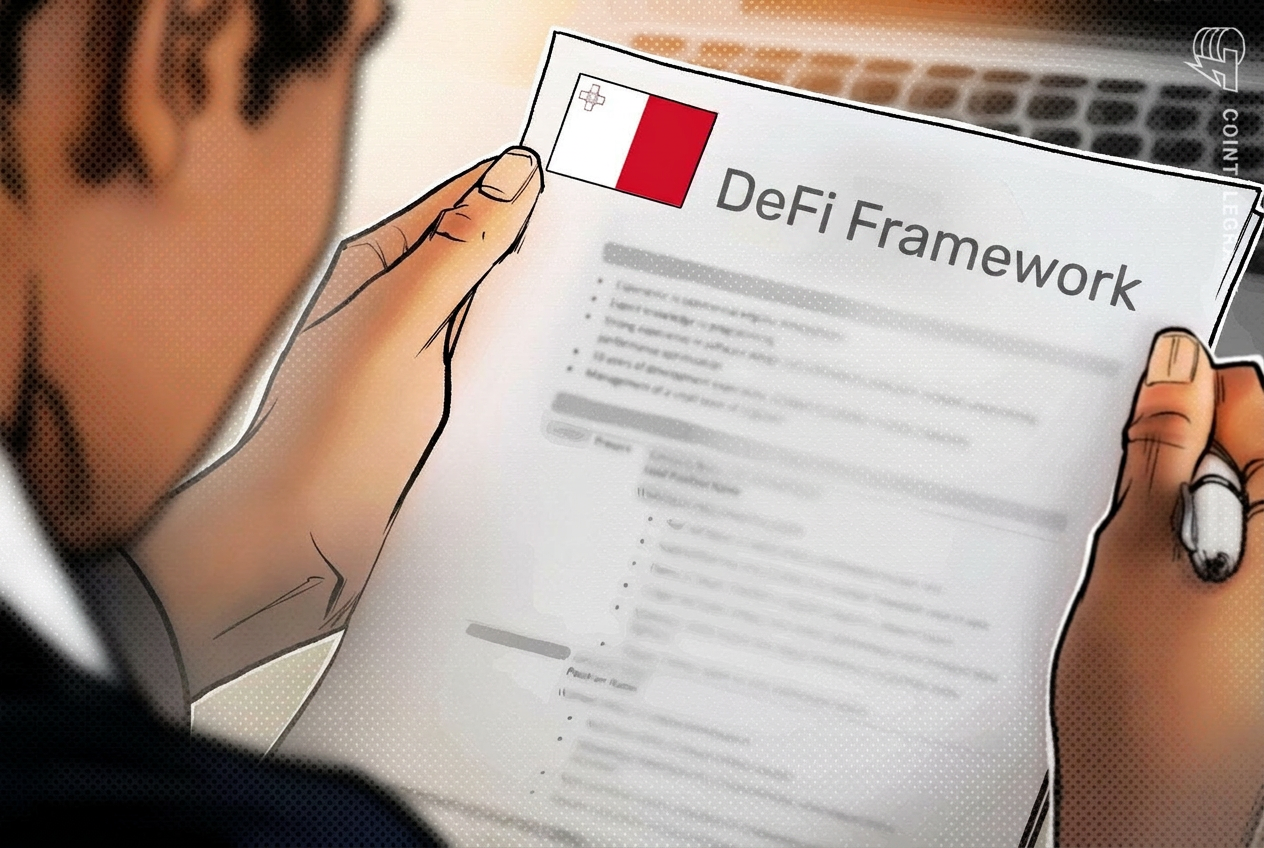
Malta Charts a New Course for DeFi: A MiCA-Era Rulebook for DAOs Signals Global Regulatory Shift
Malta, a nation that has historically positioned itself at the vanguard of digital asset regulation, is once again making waves with a groundbreaking proposal: a comprehensive rulebook for Decentralized Finance (DeFi) that specifically addresses Decentralized Autonomous Organizations (DAOs) under a MiCA-era framework. This proactive stance, announced by the Maltese regulator, signals a critical inflection point for the global crypto ecosystem, moving beyond nascent policy discussions to concrete, actionable regulatory frameworks. The island nation is actively seeking industry feedback on this legal structure for software-governed organizations, driven by the astute observation that many DeFi projects, despite their claims, often fall short of true decentralization.
As a senior crypto analyst, I view this initiative not just as a local regulatory update but as a bellwether for the future of DeFi governance worldwide. It tackles one of the most persistent dilemmas facing regulators: how to apply traditional legal principles to entities that are inherently borderless, automated, and often pseudonymous. Malta's move effectively acknowledges the maturity and systemic importance of DeFi, compelling the industry to confront the realities of accountability and risk management.
The Regulatory Imperative: Addressing the Decentralization Delusion
The burgeoning growth of the DeFi sector, with billions of dollars locked in various protocols, has brought with it an undeniable need for regulatory clarity. Yet, the very ethos of DeFi – decentralization – has often been cited as a shield against conventional oversight. Malta’s framework directly challenges this notion. The regulator’s premise that "many DeFi projects are not fully decentralized" is not merely an observation; it's a profound statement that underpins the entire proposal. Indeed, a closer look at many DAOs reveals varying degrees of centralization, often manifested in highly concentrated token ownership, core developer teams retaining significant control over smart contract upgrades, or multisig wallets controlled by a small group of individuals.
This "decentralization delusion" creates a regulatory grey area, exposing users to risks related to governance exploits, rug pulls, and opaque decision-making processes, all while lacking clear avenues for recourse. MiCA (Markets in Crypto-Assets Regulation), the EU's landmark crypto legislation, primarily focuses on crypto-asset issuance and service providers. While transformative, MiCA does not explicitly provide a comprehensive framework for the complex, often unmediated interactions within DeFi protocols or for the legal standing of DAOs. Malta's proposal seeks to bridge this gap, extending regulatory principles born from MiCA's spirit into the uncharted territory of software-governed finance.
Malta's Vision: Key Tenets of the Proposed Framework
While the full details of the proposed rulebook are subject to industry feedback, several key tenets can be inferred from the source context and Malta's past regulatory approaches:
- Legal Recognition and Classification of DAOs: This is arguably the most significant aspect. By providing a legal framework, Malta is likely exploring ways to classify DAOs – perhaps as a novel legal entity, a type of foundation, or even an association – thereby granting them a legal personality and defining their rights, obligations, and liabilities. This could pave the way for DAOs to engage with traditional finance and legal systems more effectively, facilitating real-world asset (RWA) tokenization and institutional adoption.
- Defining and Assessing "Decentralization": The core challenge and innovation will lie in the criteria Malta proposes to determine a project's level of decentralization. This could involve metrics such as token distribution, governance voting mechanisms (e.g., quorum requirements, vote delegation), control over smart contract upgradeability, multisig wallet signatories, and the distribution of development power. Protocols that fail to meet a certain decentralization threshold might be subjected to more stringent regulatory requirements, perhaps akin to traditional financial service providers.
- MiCA-Era Principles: The "MiCA-era framework" suggests the incorporation of key regulatory principles already established or emerging within the EU. This includes robust consumer protection measures, market integrity rules (e.g., preventing market manipulation), operational resilience standards, and comprehensive Anti-Money Laundering (AML) and Counter-Terrorist Financing (CTF) compliance.
- Transparency and Accountability: The framework will likely mandate greater transparency regarding a DAO's operations, governance structure, and treasury management. This could include requirements for regular audits, disclosure of key decision-makers (even if pseudonymous at the protocol layer, there might be requirements for legal representatives), and clear mechanisms for dispute resolution.
Implications for the Decentralized Ecosystem and Global Precedent
Malta's initiative carries profound implications for the entire DeFi ecosystem. For projects seeking to operate within, or leverage the clarity provided by, the Maltese jurisdiction, it offers a pathway to legitimacy and reduced regulatory uncertainty. However, it also introduces a new layer of compliance burden, forcing protocols to critically evaluate their operational models and potentially restructure their governance to meet defined decentralization criteria.
More broadly, this proposal could set a significant global precedent. As regulators worldwide grapple with DeFi, Malta's framework could serve as a blueprint, influencing future discussions in major jurisdictions like the U.S., UK, and even the broader EU (potentially informing a "MiCA 2.0" or a dedicated DeFi regulation). The "decentralization test" in particular, if effectively implemented, could become a global standard, driving a wave of genuine decentralization or, conversely, prompting projects to formally incorporate as traditional entities.
Navigating the Challenges and the Path Forward
Despite its forward-thinking nature, Malta's proposal is not without challenges. Defining and measuring "decentralization" remains a complex, dynamic, and potentially subjective exercise. The inherent fluidity of blockchain technology means that a protocol's level of decentralization can evolve rapidly. There is also the risk of regulatory arbitrage, where projects might simply migrate to less regulated jurisdictions if the compliance burden is perceived as too onerous, potentially stifling innovation rather than fostering it.
However, the active solicitation of industry feedback is a positive sign, indicating a willingness to engage with the nuances of this rapidly evolving sector. The success of this framework will hinge on its ability to strike a delicate balance: providing necessary investor protection and market integrity without stifling the core innovation and permissionless nature that defines DeFi. Malta's bold step underscores a pivotal truth: the era of unregulated experimentation in DeFi is drawing to a close. The future of decentralized finance will increasingly be shaped by thoughtful, comprehensive regulatory frameworks that, like Malta's, dare to define what true decentralization entails in a legally accountable world.