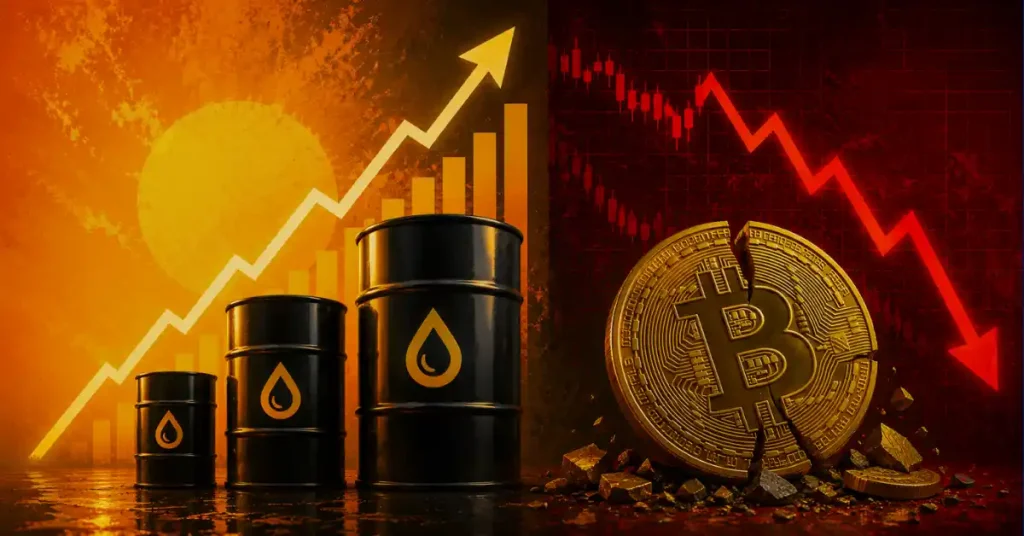
The Geopolitical Chessboard Shifts: Oil Prices Plunge Amid Diplomatic Hopes
The global financial landscape witnessed a significant recalibration this week as Brent crude oil prices plummeted below the $84 per barrel mark, with U.S. crude following suit under $79. This sharp decline, which saw Brent briefly slide as much as 7.3% to $81.55 before recovering, was a direct consequence of President Donald Trump's unexpected decision to halt planned military strikes on Iran. Instead, the focus has shifted towards renewed diplomatic talks, primarily aimed at ensuring the unobstructed passage through the critical Strait of Hormuz. For seasoned market watchers and crypto enthusiasts alike, this geopolitical pivot is not merely about oil; it's a profound signal that reverberates across traditional financial instruments and inevitably touches the digital asset realm.
The Strait of Hormuz, a narrow sea lane connecting the Persian Gulf to the open ocean, is a strategic chokepoint through which roughly one-fifth of the world's total oil supply passes. Tensions in the region, particularly involving Iran, invariably inject a substantial 'geopolitical risk premium' into crude oil prices. The anticipation of military conflict and potential disruptions to this vital shipping route had previously fueled a rally in July. Trump's pause, therefore, immediately unwound much of this premium, translating into a sharp sell-off in energy markets. This de-escalation suggests a reduction in immediate supply-side risks, signaling to the market that a major disruption to global oil flows is, for now, less likely.
Traditional Markets React: A Breath of Fresh Air?
The implications of this oil price drop extend far beyond the energy sector. For traditional financial markets, lower crude prices generally act as a positive economic stimulus. Here's why:
Inflationary Pressures Ease: Energy costs are a significant component of inflation metrics. A sustained drop in oil prices alleviates inflationary pressures, providing central banks with potentially more flexibility regarding monetary policy. Less pressure to hike interest rates, or even the prospect of earlier rate cuts, can significantly influence market liquidity and investor sentiment.
Consumer Spending Boost: Cheaper gasoline and energy bills leave more disposable income in consumers' pockets. This can translate into increased spending on goods and services, providing a tailwind for consumer-driven economies.
Corporate Earnings: For many industries, particularly manufacturing and transportation, energy is a major input cost. Lower oil prices reduce operational expenses, potentially boosting corporate profit margins and making equities more attractive.
Equities and Risk-On Sentiment: Reduced geopolitical risk, combined with improved economic outlooks from lower energy costs, typically fosters a 'risk-on' environment. This encourages investors to move capital from safe-haven assets (like government bonds or gold) into riskier, growth-oriented assets, including stocks.
The Dollar's Dance: The U.S. Dollar's reaction is nuanced. While de-escalation often supports global risk appetite, potentially strengthening currencies against safe havens, lower inflation expectations stemming from cheaper oil could temper expectations for aggressive Federal Reserve tightening. This could put downward pressure on the dollar over the medium term, a factor often correlated with cryptocurrency performance.
A Senior Crypto Analyst's Lens: Decoding the Digital Ripple
As a senior crypto analyst, my focus immediately turns to how these macro-geopolitical shifts filter into the volatile yet increasingly integrated world of digital assets. The connection might not be direct or immediate, but the underlying sentiment and liquidity dynamics are undeniably influential.
Risk-On Reigns Supreme for Crypto?
The most direct impact for the cryptocurrency market is likely through the 'risk-on' sentiment. When global stability improves, and traditional financial markets exhibit less fear, investors' appetite for higher-risk, higher-reward assets tends to increase. Cryptocurrencies, particularly Bitcoin and Ethereum, are often viewed as 'risk assets' by institutional investors, meaning they tend to perform well when global liquidity is abundant and economic uncertainty is low. A calmer geopolitical climate, free from the immediate threat of military escalation in a critical oil-producing region, can free up capital and encourage allocation into speculative assets.
Inflation, Monetary Policy, and Liquidity
The easing of inflationary pressures due to lower oil prices is a significant development for crypto. Should central banks perceive a sustained downtrend in inflation, the pressure to maintain aggressive monetary tightening policies diminishes. A dovish shift, or even the anticipation of one, could lead to a more accommodative financial environment characterized by lower interest rates and increased liquidity. Historically, periods of high liquidity and lower real interest rates have been immensely beneficial for crypto valuations, as capital seeks higher returns beyond traditional yield-bearing assets.
Bitcoin's Dual Narrative: Digital Gold vs. Risk Asset
This scenario also highlights the ongoing debate around Bitcoin's role as either 'digital gold' (a safe-haven asset) or a 'risk asset.' If traditional safe havens like physical gold see outflows due to reduced geopolitical risk, Bitcoin's correlation could be tested. In this specific context, the overarching 'risk-on' sentiment driven by de-escalation and potential monetary easing is more likely to reinforce Bitcoin's identity as a risk-on growth asset rather than primarily a safe-haven. Investors might prioritize its growth potential in a more stable environment over its store-of-value characteristics, especially if inflation concerns recede.
Institutional Interest and Market Maturity
A more predictable and stable macroeconomic backdrop, even one influenced by geopolitical events, makes the crypto market more palatable for institutional investors. Reduced volatility in critical traditional markets (like energy) can reduce overall market fear, making the higher volatility inherent in crypto seem less daunting by comparison. As the crypto market matures and gains further integration into traditional finance through instruments like spot ETFs, these macro-shifts will continue to exert a more pronounced influence, attracting broader institutional capital searching for growth in a calmer landscape.
The Road Ahead: Vigilance Amidst Volatility
While Trump's pause offers a temporary reprieve and a potential tailwind for risk assets, including cryptocurrencies, it is crucial to remain vigilant. Geopolitical situations are inherently fluid and can change rapidly. Diplomatic talks can falter, and tensions can reignite. Therefore, any bullish sentiment derived from this de-escalation should be viewed with a degree of caution.
Furthermore, the crypto market is influenced by a multitude of factors beyond macroeconomics, including regulatory developments, technological advancements (e.g., Ethereum's upgrades, new layer-2 solutions), network adoption rates, and project-specific news. While a more stable global economic environment creates fertile ground, sustained growth in the digital asset space will ultimately depend on these fundamental drivers and the continued innovation within the ecosystem.
Conclusion: A Nuanced Opportunity for Digital Assets
The fall in Brent crude prices following President Trump's pause on Iran strikes represents a significant geopolitical de-escalation that immediately impacts traditional financial markets by reducing inflationary pressures and fostering a 'risk-on' environment. For the cryptocurrency market, this translates into a nuanced opportunity. While not a direct catalyst, the improved macro sentiment, potential for more accommodative monetary policies, and increased appetite for risk assets could provide a supportive backdrop for digital asset valuations. Crypto investors should closely monitor both ongoing geopolitical developments and the broader macroeconomic shifts, understanding that these traditional market ripples are increasingly integral to the health and trajectory of the digital economy.
Featured News Partner: Coinpedia News