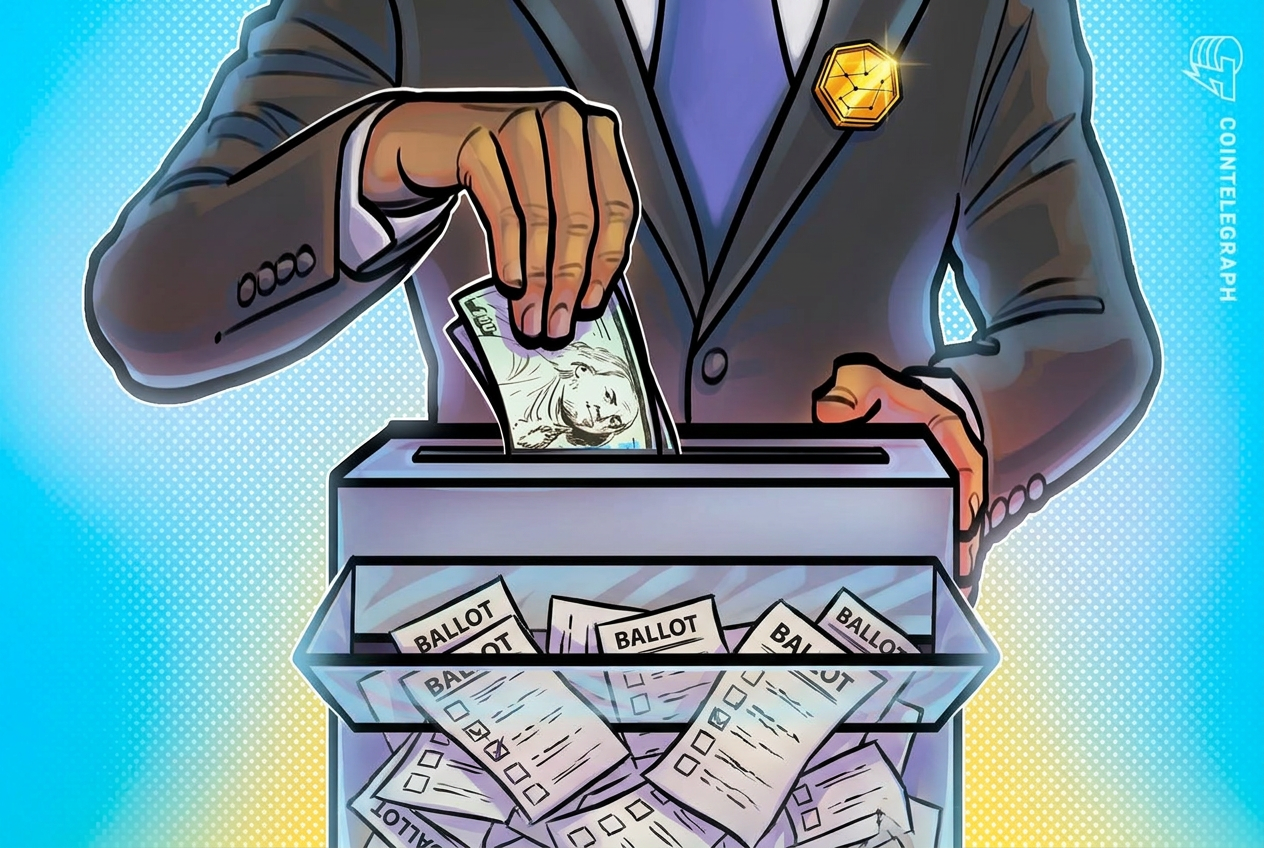
The New Political Battleground: Crypto’s Deepening Influence in US Elections
The political landscape is increasingly becoming a critical arena for the cryptocurrency industry. A recent injection of an additional $1 million by a crypto industry-aligned Political Action Committee (PAC) into the Michigan House race for incumbent Shri Thanedar's re-election bid against fellow Democratic candidates is not just a financial transaction; it's a profound statement. As Senior Crypto Analysts, we view this move as a clear indicator of the digital asset sector's rapidly maturing political strategy and its growing intent to directly shape legislative outcomes through traditional electoral processes.
This isn't an isolated incident but rather a significant marker in a broader trend. For years, the crypto industry operated largely outside mainstream political discourse, focusing on technological development and community building. However, with increasing regulatory scrutiny, the potential for groundbreaking innovation, and the burgeoning market capitalization of digital assets, the industry has recognized the imperative to engage with policymakers. PACs, funded by executives, companies, and proponents within the crypto ecosystem, have emerged as powerful vehicles for this engagement, aiming to elect candidates who are sympathetic to, or at least informed about, the unique characteristics and potential of decentralized technologies.
Understanding the Strategic Imperative Behind Crypto PACs
Why are crypto PACs pouring millions into specific races? The answer lies in the industry's overarching goals: achieving regulatory clarity, fostering an environment conducive to innovation, and ensuring the United States remains competitive in the global digital asset space. Currently, the regulatory patchwork for cryptocurrencies in the US is complex and often contradictory, leading to uncertainty that stifles growth and encourages talent to migrate overseas. By supporting candidates like Thanedar, who may be perceived as open to understanding or advocating for favorable crypto legislation, these PACs are attempting to build a cohort of 'crypto champions' within Congress.
The messaging deployed through these PAC-funded advertisements is typically multi-faceted. It often highlights the economic potential of blockchain technology, job creation, and the importance of fostering American innovation. It seeks to frame digital assets not as speculative toys but as foundational technologies capable of revolutionizing finance, supply chains, and data management. In Thanedar's primary race, the ads might emphasize his understanding of technology or his commitment to fostering future-forward industries, subtly or overtly aligning these with crypto's agenda. This strategic communication aims to shift public perception and, consequently, voter sentiment, towards candidates supported by the industry.
The Thanedar Candidacy: A Microcosm of Macro Trends
The specific focus on Shri Thanedar's re-election in Michigan is particularly illuminating. While details of his exact stance on crypto may vary, the PAC's investment suggests he is either viewed as an existing ally or a strategically important target for cultivation. Primary elections, especially within a single party, can be fiercely contested and often have lower voter turnout, making them potentially more susceptible to targeted advertising campaigns funded by well-resourced PACs. A $1 million infusion into such a race can significantly amplify a candidate's message, fund aggressive ad buys across various media, and mobilize grassroots efforts.
Furthermore, Michigan, as a diverse economic state with both traditional manufacturing and emerging tech sectors, presents an interesting battleground. Aligning crypto's narrative with economic growth and technological advancement could resonate with a broad base of voters. If successful, Thanedar's re-election, influenced by crypto PAC money, would serve as a powerful case study for future electoral engagements, demonstrating the tangible impact of the industry's political muscle.
The Broader Implications: A New Era for Digital Assets in Washington
This escalating political engagement signifies a critical maturation phase for the crypto industry. It mirrors the trajectory of other powerful sectors, from big tech to pharmaceuticals, which have long relied on PACs and lobbying efforts to protect their interests and shape policy. The influx of money from crypto PACs is not just about backing individual candidates; it's about embedding the industry's priorities into the national political dialogue.
However, this strategy is not without its risks. The increased visibility and financial influence can also attract scrutiny. Critics may raise concerns about special interest money influencing elections, potentially leading to accusations of undue influence or attempts to bypass democratic processes. Transparency will be paramount, as the public and media increasingly question the sources and motivations behind significant campaign contributions.
For the crypto industry itself, successful political engagement could lead to a more stable and predictable regulatory environment, fostering innovation and attracting greater institutional investment. Conversely, missteps or perceived overreach could trigger a backlash, potentially leading to more restrictive legislation. The delicate balance lies in advocating effectively without alienating the broader public or inviting excessive regulatory scrutiny.
Looking Ahead: The Future of Crypto-Political Dynamics
As we look to future election cycles, we can expect to see an intensification of these efforts. Crypto PACs will likely expand their reach, targeting a wider array of federal and even state-level races. The industry is clearly committed to investing in its political future, understanding that the technological revolution it champions must be accompanied by a political one.
The $1 million pouring into the Michigan House race is more than just a campaign donation; it's a strategic investment in the future of digital assets in America. It underscores the undeniable fact that crypto is no longer just a technological phenomenon but a powerful and increasingly sophisticated political force, poised to leave an indelible mark on US policy and elections for years to come.