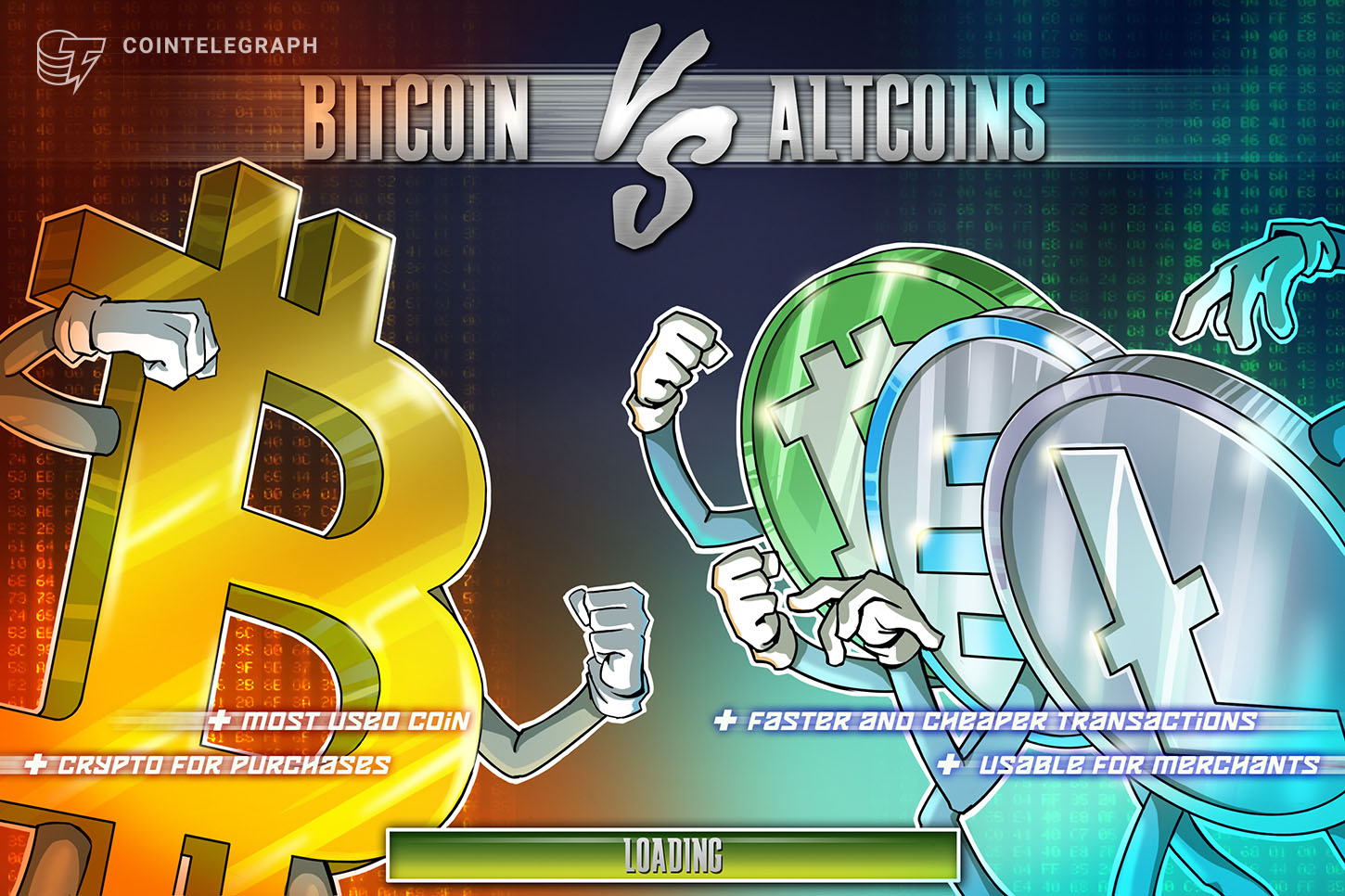
The Great Bitcoin Absorption: Are Altseason Rotations a Relic of the Past?
The cryptocurrency market is at a pivotal juncture, marked by Bitcoin's relentless ascent and assertive dominance. For years, investors eagerly awaited the 'altseason'—a period of capital rotation from Bitcoin into altcoins, leading to parabolic gains. However, recent dynamics suggest a profound shift. With Bitcoin's market capitalization dominance firmly holding above critical support, a pressing question emerges: are altcoin rotations collapsing, and have altseasons truly disappeared?
Understanding Bitcoin Dominance: A Shifting Tide
Bitcoin dominance (BTCD), representing BTC's market cap as a percentage of the total crypto market, is crucial. Historically, rising BTCD signals 'risk-off' sentiment or BTC leading while altcoins lag. Conversely, falling BTCD, especially after a BTC rally, typically heralds an altseason. Currently, BTCD is high and maintaining strong support above a key level. This sustained strength indicates capital is likely staying within BTC, or quickly returning, preventing the broad capital diffusion needed for a widespread altseason.
The Anatomy of Past Altseasons vs. Current Reality
Recalling the euphoric altseasons of 2017 and 2021, the pattern was distinct: Bitcoin would rally, consolidate, then gains would 'rotate' into altcoins, starting with large-caps and cascading down, generating astronomical returns. These periods were fueled by retail speculation and abundant liquidity. Today's market presents a stark contrast. While Bitcoin achieved new all-time highs, driven by institutional inflows via spot ETFs, the expected spillover into altcoins has been conspicuously absent. Ethereum, notably, has underperformed Bitcoin this year, a rare phenomenon during previous bull runs where ETH typically led. This divergence highlights a fundamental shift in capital allocation.
Why Altcoin Rotations Are Collapsing
Several factors contribute to the apparent collapse of traditional altcoin rotations:
1. Institutionalization of Bitcoin: Spot Bitcoin ETFs have fundamentally changed market dynamics. Large institutional capital now has a regulated conduit to invest in Bitcoin, largely remaining within BTC rather than seeking riskier altcoin plays.
2. Maturation of the Market: The crypto market is no longer purely retail-driven. Investors are more discerning, focusing on projects with robust fundamentals, clear utility, and sustainable tokenomics, raising the bar for altcoins.
3. Macroeconomic Headwinds: Higher interest rates and persistent inflation concerns globally foster 'risk-off' sentiment. Investors prefer safer, larger-cap assets. Altcoins, as higher-beta assets, are thus more susceptible to macro pressures.
4. Liquidity Concentration: Capital flowing into Bitcoin ETFs concentrates liquidity, making it harder for smaller altcoins to sustain significant price movements. Even moderate selling can have a disproportionate impact.
5. Regulatory Scrutiny: Increased regulatory attention, particularly from the SEC, casts a shadow over many altcoins. Uncertainty over their security status deters institutional and cautious retail investors.
Have Altseasons Truly Disappeared? A Nuanced Perspective
Declaring altseasons 'disappeared' entirely might be premature, but the traditional, broad-based altseason may be a phenomenon of the past. Instead, we're likely transitioning into an era of 'sector-specific mini-seasons' or highly selective alpha generation. We've seen glimpses: fleeting rallies in meme coins, brief surges in AI-related tokens, or concentrated interest in specific DeFi or RWA projects. These are often driven by specific narratives or catalysts, but lack the widespread, sustained rotation of previous altseasons. Capital, when it flows into altcoins, does so with surgical precision, targeting immediate opportunities. A broad altseason remains contingent on factors like significant Bitcoin cooling-off, sustained new retail liquidity, or clear regulatory resolution for altcoins. Until then, Bitcoin will likely continue its capital absorption.
Implications for Investors: Navigating the New Landscape
For investors, this shift necessitates a re-evaluation of portfolio strategies. Blindly diversifying into many altcoins expecting a rising tide is now a higher-risk strategy. Instead, a more judicious, research-intensive approach is required:
- Focus on Fundamentals: Prioritize projects with strong use cases, active development, robust communities, and clear competitive advantages.
- Sector Rotation: Identify emerging narratives (e.g., modular blockchains, L2s, decentralized AI, real-world assets) and allocate strategically.
- Risk Management: Maintain higher allocations to Bitcoin and Ethereum for greater resilience and institutional adoption.
- Patience: The market is evolving. While the broad altseason might be on hold, opportunities will arise for well-researched projects.
Passive altcoin outperformance may be over, replaced by a market demanding active engagement and a keen eye for niche trends.
Conclusion: A New Paradigm for Crypto Capital
The cryptocurrency market is undeniably maturing, redefining its cyclical patterns. Bitcoin's sustained dominance and the collapse of broad altcoin rotations signal a fundamental shift in capital flow. While the notion of a universal altseason may be fading, it's being replaced by a more selective, sophisticated, and perhaps healthier market dynamic. Investors must adapt, recognizing that the era of easy, widespread altcoin gains may be over, giving way to a period where targeted research and strategic allocation will be paramount.