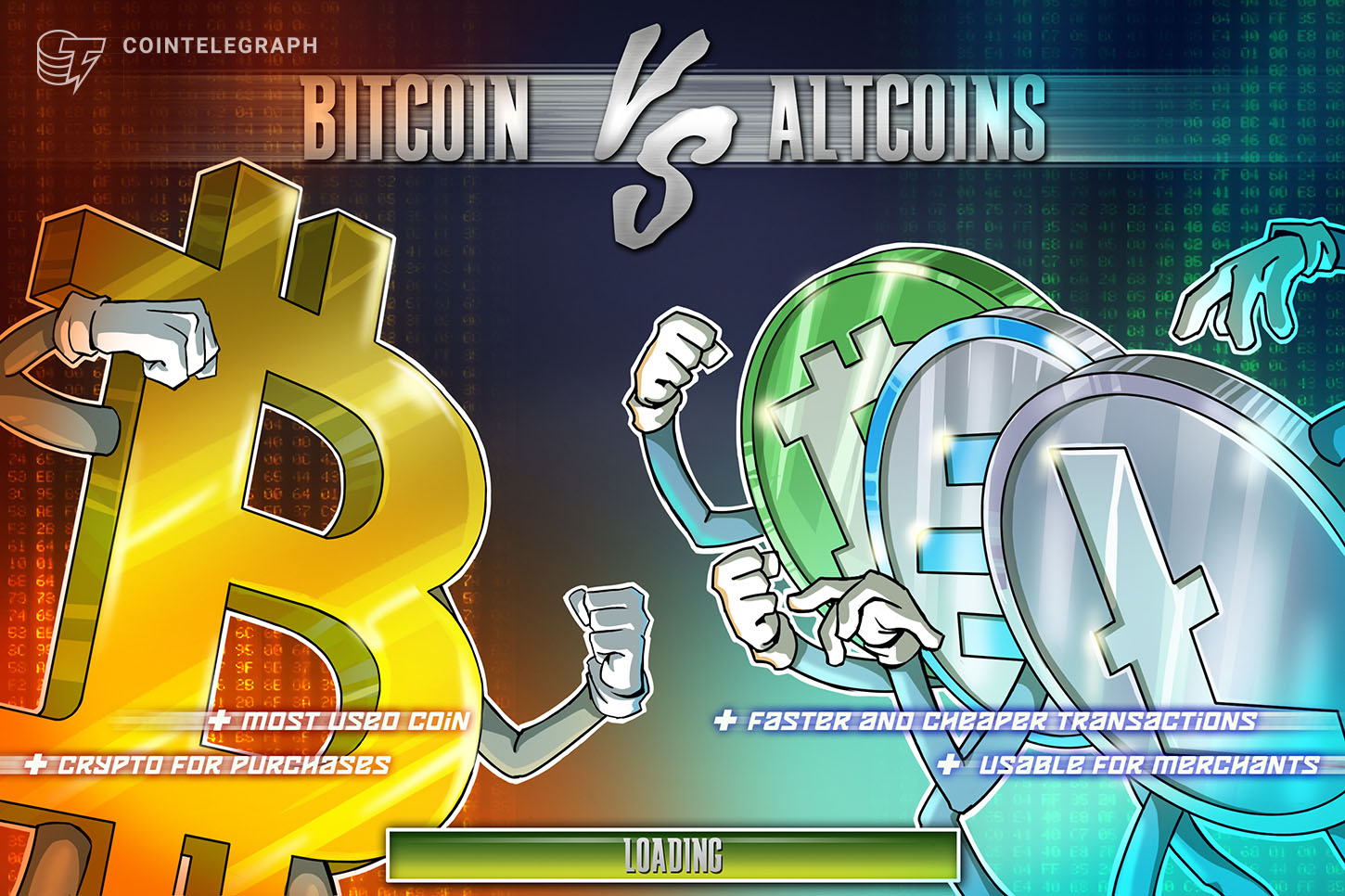
The Elusive Altseason: A Disappearing Act or a Delayed Performance?
For seasoned participants in the cryptocurrency markets, the term “altseason” conjures images of exhilarating portfolio growth, where capital rotates swiftly from a consolidating Bitcoin into a vibrant array of altcoins, driving parabolic gains across the board. It's a hallmark of crypto bull cycles, a widely anticipated phenomenon. Yet, as Bitcoin's market dominance continues to defy expectations, stubbornly holding above critical support levels, a pervasive question lingers in the minds of investors and analysts alike: Have altseasons, as we knew them, simply disappeared?
The current market landscape presents a compelling, and for many altcoin holders, a challenging narrative. Bitcoin (BTC) is not just maintaining its pole position; it's actively absorbing liquidity, acting as a veritable capital siphon, and seemingly delaying the broader altcoin rally that traditionally follows BTC's lead. This article, from a senior crypto analyst's perspective, delves into the mechanics of this shift, explores its implications, and posits whether we are witnessing an end to altseasons or merely their profound evolution.
Bitcoin's Ironclad Dominance: An Unprecedented Hold
The Bitcoin Dominance Index, a crucial metric representing BTC's market capitalization as a percentage of the total crypto market cap, has been remarkably resilient. Despite Bitcoin hitting new all-time highs and consolidating at elevated levels, the expected capital rotation into altcoins has largely failed to materialize on a broad scale. Instead, BTC dominance often strengthens during its rallies and consolidates, maintaining its grip, rather than relinquishing it to the broader altcoin market.
This sustained dominance above key technical support levels signals robust institutional demand and a preference for Bitcoin's liquidity and relative stability in a volatile asset class. The implication is clear: much of the new capital entering the crypto ecosystem, alongside existing capital, is choosing to reside primarily within Bitcoin, starving altcoins of the necessary inflows to ignite a widespread rally.
The Pillars of Bitcoin's Enduring Strength
Several convergent factors underpin Bitcoin's current unyielding strength:
- Spot ETF Inflows: The approval and subsequent success of spot Bitcoin ETFs in the U.S. have been a game-changer. These vehicles provide unprecedented institutional access and legitimacy, driving consistent, multi-billion-dollar inflows from traditional finance. This stream of capital is largely directed solely at Bitcoin, creating a powerful one-way demand pressure.
- Macro Tailwinds & Safe-Haven Narrative: In an uncertain global economic climate, characterized by geopolitical tensions and inflationary concerns, Bitcoin is increasingly being perceived as a digital store of value and a hedge against fiat debasement. This 'digital gold' narrative strengthens its appeal as a safe-haven asset, drawing in risk-averse capital.
- Halving Narrative & Scarcity: The recent Bitcoin Halving event reinforced its scarcity model, adding another layer of bullish sentiment. Post-halving, the reduced supply emission often creates a supply shock, further supporting price action and investor confidence in BTC.
- Unparalleled Liquidity and Brand Recognition: Bitcoin remains the most liquid and recognized cryptocurrency. For large-scale investors, the ability to enter and exit positions without significant slippage is paramount, a characteristic few altcoins can match.
The Plight of Altcoins: A Prolonged Wait
With Bitcoin absorbing a disproportionate share of capital, altcoins face significant headwinds. While some niche sectors or individual projects may experience sporadic pumps driven by specific news or speculative fervor, these rallies are often short-lived and fail to sustain momentum. The broader market lacks the sustained, widespread rotation needed for a true altseason.
Many altcoins are struggling to outperform BTC, even bleeding against Bitcoin pairs. Investors seeking high-beta exposure are increasingly finding that the risk-adjusted returns in many altcoins do not justify the significantly higher volatility compared to Bitcoin. This phenomenon highlights a shift in risk appetite and capital allocation strategies within the crypto space.
A Historical Lens: Echoes of Past Cycles vs. Present Reality
Historically, altseasons typically unfolded after Bitcoin had established new all-time highs, entered a phase of consolidation, or experienced a slight pullback. This period of BTC stability allowed investors to take profits from their Bitcoin holdings and redeploy that capital into higher-beta altcoins, anticipating outsized returns. The 2017 and 2021 bull runs are prime examples of this classic rotation model.
However, the current cycle deviates significantly. Bitcoin's ascent has been less about a 'pump and dump' followed by altcoin rotation, and more about a sustained accumulation by institutions. This new dynamic implies that for a broad altseason to ignite, Bitcoin may need to undergo a more prolonged period of stability or even a significant correction to truly free up capital and shift risk appetite back towards the broader altcoin market.
The Evolving Nature: Not Disappeared, But Transformed
While the traditional, indiscriminate altseason may indeed be a relic of a less mature market, it is premature to declare the 'death' of altseasons entirely. Rather, we are likely witnessing their transformation:
- Delayed, Not Gone: Altseasons are likely delayed, awaiting a clearer signal from Bitcoin. A prolonged period of BTC consolidation, or even a modest correction, could be the catalyst that encourages capital redeployment into altcoins.
- Selective Altseasons: Future altseasons may be more targeted and sector-specific. Instead of a broad surge, we might see 'mini-altseasons' focused on narratives like AI, DePIN, gaming, or specific Layer 2 solutions that demonstrate strong fundamentals, technological innovation, and clear adoption metrics. Institutional scrutiny will favor projects with genuine utility and robust tokenomics.
- The Ethereum Factor: The potential approval of a spot Ethereum ETF could introduce a similar dynamic to ETH as Bitcoin experienced. This could initiate an 'ETH-season' and potentially a broader rally for large-cap altcoins, but it's unlikely to trigger a free-for-all across all small caps immediately.
- Maturity and Due Diligence: As the market matures, investors – especially institutional ones – are becoming more discerning. Indiscriminate gambling on meme coins or projects without strong fundamentals will likely yield diminishing returns.
Conclusion: Navigating the New Normal
The current state of the crypto market reflects a significant maturation and institutionalization, primarily driven by Bitcoin. The collapse of traditional Bitcoin-to-altcoin rotations is not necessarily a sign of altseasons disappearing, but rather an indicator that the market's dynamics are evolving. Investors must adapt to this new normal, characterized by Bitcoin's sustained dominance and a more selective approach to altcoin investing.
Patience will be paramount. When altseason eventually arrives, it may look different: more segmented, more fundamentally driven, and perhaps less frenzied than its predecessors. As senior crypto analysts, we must emphasize that success in this evolving landscape will hinge on rigorous fundamental analysis, strategic capital allocation, and a deep understanding of market cycles, rather than simply waiting for a rising tide to lift all boats.