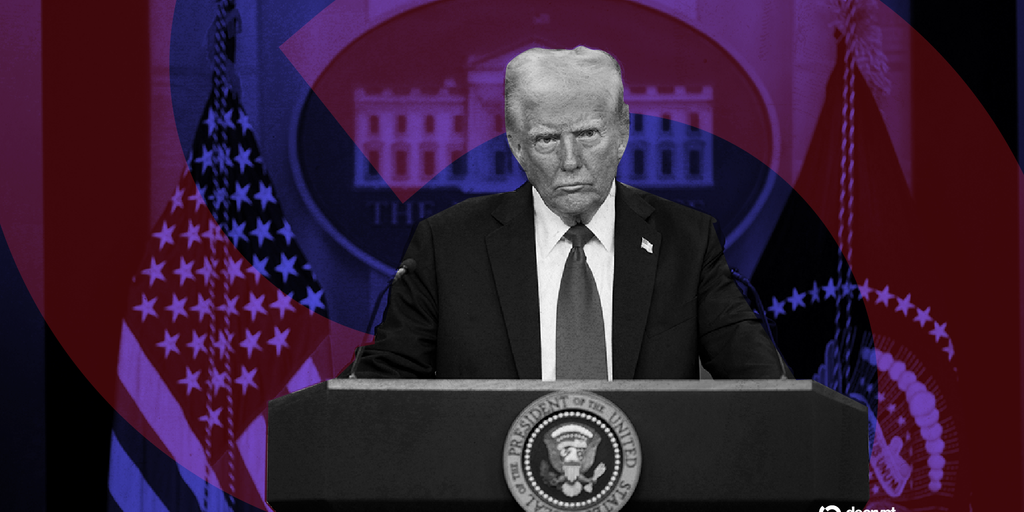
AI Under Siege: US Government's Anthropic Order Rings Alarm Bells for Web3 Decentralization
The recent directive from the US government for Anthropic, a leading AI research company, to pull its Claude Fable and Mythos AI models has sent a palpable chill through the tech world. While the immediate focus is on artificial intelligence, as a Senior Crypto Analyst, I see this development as a profound and potentially ominous harbinger for the burgeoning decentralized AI (DeAI) space and the broader Web3 ecosystem. Anthropic's pushback, characterizing the order as an overreach and noting the cited vulnerability is widespread, underscores a fundamental tension brewing between centralized control and the imperative for innovation – a tension Web3 was explicitly designed to address.
The specifics of the government's concern regarding Claude Fable and Mythos remain somewhat opaque, beyond the general mention of a vulnerability. However, the precedent set by such an intervention is crystal clear: governments are willing to directly interfere with the deployment of AI models they deem problematic, regardless of the developer's objections or the industry's existing standards. This isn't merely about a bug fix; it's about control over computational intelligence and its distribution. For those of us observing the intersection of AI and blockchain, this move instantly conjures images of potential regulatory choke points that could stifle innovation in a domain meant to be open and permissionless.
Think of the parallels to the early days of cryptocurrency regulation. Governments, initially perplexed, moved from observation to calls for stringent KYC/AML, delisting of privacy coins, and the general chilling effect on nascent DeFi protocols. The Anthropic incident suggests a similar playbook might be forming for AI. If a prominent, well-funded centralized entity like Anthropic can be compelled to halt deployment, what does this mean for smaller, decentralized AI projects or DAOs attempting to build open-source, community-governed AI models? The fear is that the 'vulnerability' cited today could become a catch-all justification for shutting down any AI initiative deemed inconvenient or threatening to established power structures.
The very ethos of Web3 – decentralization, censorship resistance, and community governance – is a direct response to the kind of centralized control witnessed in the Anthropic situation. Projects like Fetch.ai, Oasis Network, Ocean Protocol, and numerous others are actively working towards building decentralized AI infrastructure, data marketplaces, and sovereign AI agents. Their vision is to democratize access to AI, ensure transparency, and prevent single points of failure or control, whether from corporate behemoths or governmental bodies. The US government's order against Anthropic, however, highlights the immense challenge these projects face. How do you regulate an AI model that lives on a blockchain, is governed by a DAO, and whose code is open-source and immutable? The answer, from a regulatory perspective, is likely to be: by targeting the access points, the developers, or the users.
This incident also forces a critical re-evaluation of the 'move fast and break things' mantra versus the 'safety first' approach. Anthropic's argument that the vulnerability is widespread across the industry suggests a common development challenge, not necessarily malicious intent. Yet, the government's response indicates a low tolerance for perceived risks, potentially at the cost of rapid advancement. In the Web3 world, where open-source development and iterative improvements are standard, the specter of pre-emptive regulatory shutdowns could deter innovation. Developers might become overly cautious, self-censoring features or delaying launches to avoid regulatory scrutiny, thereby ceding ground to less innovative or more compliant (and potentially less powerful or robust) systems.
Furthermore, the lack of transparency surrounding the specific vulnerability is concerning. In the crypto space, open audits and bug bounties are standard practice for establishing trust and security. If governments can issue broad, opaque directives based on undisclosed vulnerabilities, it undermines the principles of transparency and due process vital for fostering a robust and trustworthy ecosystem, whether it's for financial protocols or AI models. This creates an environment of uncertainty that can scare away capital and talent, pushing innovation into shadows or less regulated jurisdictions – a familiar trajectory for aspects of the crypto industry.
Looking ahead, the Anthropic order serves as a crucial inflection point. It is a loud and clear signal that the regulatory spotlight is rapidly shifting to AI, and the battle lines between centralized control and decentralized innovation are being drawn. For the Web3 community, this isn't just a distant AI problem; it's a direct challenge to the foundational principles we champion. It underscores the urgent need for robust, decentralized infrastructure that can withstand such pressures, and for the continued development of open-source, verifiable AI models that are resilient to single-point censorship. The future of AI, like the future of finance, might very well depend on our ability to build systems that are truly permissionless and beyond the arbitrary whims of any single authority.