Introduction: Bitcoin's Dual Pressures
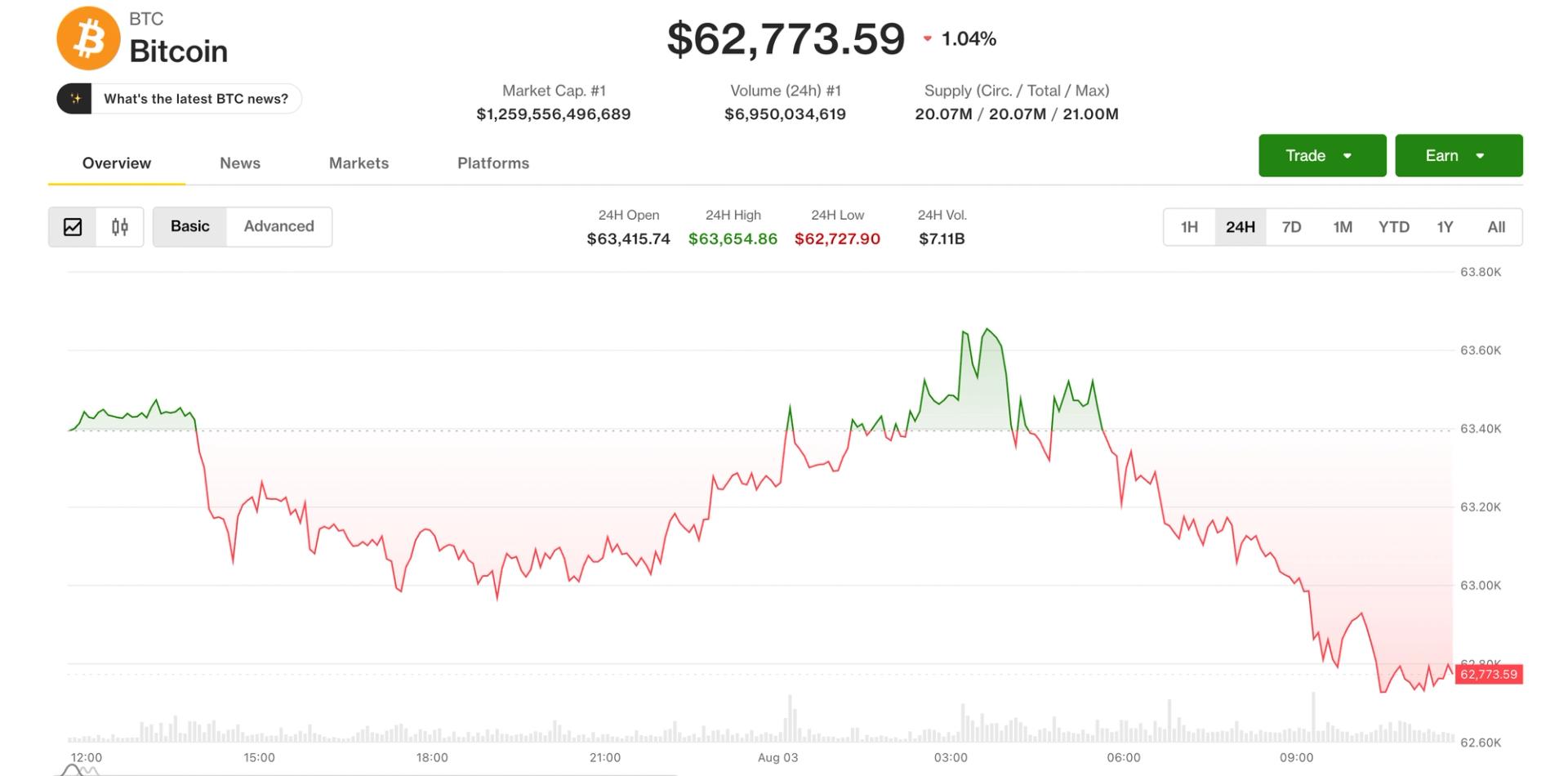
Bitcoin's recent price action has presented a perplexing picture for investors. Despite positive macroeconomic signals that typically bolster risk assets, the flagship cryptocurrency has struggled to find its footing, dipping below the critical $63,000 mark. This divergence highlights a market grappling with conflicting narratives: a broader easing of inflationary pressures on one hand, and a significant, crypto-specific security concern centered around "Coldcard-linked" losses on the other. As traditional markets celebrated a cooling economic outlook, Bitcoin's failure to catch a bid underscores the potent influence of internal industry events, particularly those impacting the fundamental tenets of self-custody and trust.
The Macro Picture: Easing Inflation Fears and Falling Yields
Recent geopolitical developments have provided a much-needed breath of fresh air for global markets. Talks between the U.S. and Iran have reportedly progressed, leading to a palpable reduction in Middle Eastern tensions. This easing of diplomatic friction swiftly translated into a decline in energy prices, with oil futures reacting positively to the prospects of stabilized supply. Concurrently, Treasury yields, often seen as a barometer for inflation expectations, also receded. This confluence of events typically signals a more benign economic environment, one where inflation risks are perceived to be diminishing.
For assets like Bitcoin, which have increasingly been viewed through the lens of a macro hedge or a risk-on asset benefiting from ample liquidity, such developments would historically be a strong catalyst for upward momentum. A reduction in inflation fears usually alleviates pressure on central banks to maintain hawkish monetary policies, potentially paving the way for interest rate cuts or a more accommodating stance – factors that traditionally favor growth assets. Yet, in a puzzling turn, Bitcoin conspicuously failed to capitalize on this seemingly bullish backdrop, suggesting that other, more immediate pressures were dominating market sentiment.
The Crypto-Specific Headwind: Coldcard's $89 Million Shadow
While global markets found solace in de-escalating tensions, the crypto ecosystem was contending with its own set of internal challenges. The market has been rattled by reports of "Coldcard-linked sweeps," an alarming development that has seen nearly $89 million in observed losses. Coldcard, a highly regarded hardware wallet, is renowned for its robust security features, making these reported losses particularly unsettling. While the exact nature and exploit vector behind these "sweeps" remain under active investigation within the community – whether it's a direct vulnerability, a sophisticated phishing campaign targeting Coldcard users, a supply chain attack, or compromise of related software/practices – the sheer magnitude of the observed outflows has undoubtedly injected a significant dose of fear, uncertainty, and doubt (FUD) into the market.
Hardware wallets represent the gold standard for self-custody, offering users sovereign control over their private keys offline. Any event that casts a shadow over the security of such devices or their associated ecosystem fundamentally challenges a core tenet of the crypto ethos. The psychological impact of such a large sum being moved due to security concerns cannot be overstated. It leads to a crisis of confidence, prompting holders to re-evaluate their security practices, potentially de-risking by moving funds off-chain, or even selling assets altogether to mitigate perceived risks. This immediate, tangible threat to asset security appears to have overshadowed any distant macroeconomic tailwinds, exerting powerful downward pressure on Bitcoin's price.
Divergent Paths and Market Sentiment
The juxtaposition of a softening macro environment against persistent crypto-specific security concerns has created a bifurcated market narrative. Bitcoin's inability to "catch a bid" despite falling oil prices and Treasury yields underscores the current dominance of internal FUD over external optimism. Investors, particularly those with a shorter time horizon or a more speculative bent, appear to be prioritizing immediate risk mitigation. The Coldcard-linked losses serve as a stark reminder of the inherent risks associated with digital assets, even for those employing best-in-class security measures. This heightened risk perception naturally dampens demand, as potential buyers become more hesitant and existing holders contemplate reducing exposure.
The $63,000 level, previously a significant support zone, now becomes a resistance point. The market's reaction suggests that while participants acknowledge macro improvements, their immediate focus is on safeguarding capital within the crypto space. The current sentiment can be best described as cautious, with a clear preference for capital preservation over aggressive accumulation. Until the full extent and root cause of the Coldcard-linked issues are clarified, and confidence in self-custody solutions is fully restored, Bitcoin may continue to struggle to decouple from these internal pressures.
Conclusion: Navigating the Complex Currents
Bitcoin's recent dip below $63,000 serves as a powerful illustration of the complex interplay between global macroeconomic forces and unique, internal cryptocurrency dynamics. While hopes for easing inflation and stable energy markets offered a potential bullish catalyst, the substantial $89 million in Coldcard-linked losses proved to be a more immediate and impactful deterrent. This incident has reignited critical discussions around the sanctity of self-custody, the vulnerabilities inherent even in robust security solutions, and the broader trust framework within the digital asset space.
For Bitcoin to reclaim its upward trajectory, a resolution or clear understanding of these security concerns is paramount to rebuilding investor confidence. Until then, even the most favorable macroeconomic winds may struggle to propel the asset forward against a backdrop of internal market anxieties. The episode reinforces that while crypto is increasingly intertwined with traditional finance, its distinct technological and security challenges can, at times, override external market signals, charting its own unique and often unpredictable course.